Murat Ulusoy. SEO & GEO Expert for companies.
Since 2003 I have been building SEO, GEO and entity strategies for companies and enterprises that want to be visible and cited as a relevant source in Google, AI Overviews, ChatGPT, Perplexity and other AI search systems. CEO & Head of SEO at SUMAX · 150+ brands · DACH / International. My strategic framework: Business Growth Architecture.SEO & GEO expert since 2003. I make companies visible in Google, AI Overviews, ChatGPT & Perplexity.

“Search is being rewritten. The question is: who defines the answers?”


20+ years of operator practice in SEO, GEO and reputation.
In the discipline since 2003 — first as an in-house SEO, since 2005 as founder and managing director of SUMAX. Focus: technical SEO architecture, entity and knowledge-graph engineering, Generative Engine Optimization (GEO) and online reputation management (ORM) for international brands.
The work runs on measurable signals — not agency rhetoric. Dashboards, log-file analysis, cross-model audits across GPT, Claude, Gemini and Perplexity. Every engagement starts with an honest assessment: what is achievable, what is not, and under what conditions.
Four levers. One integrated system.
AI, data-driven lead generation and precise marketing architecture — strategically orchestrated into one growth system that translates visibility into revenue.
SEO & GEO for generative search systems.
Technical and semantic optimization along the inference paths of Google AI Overviews, ChatGPT, Perplexity and Copilot — including passage-level citability, entity consolidation and retrieval scoring.
Brand Awareness
Digital authority through deliberate positioning, press and thought leadership. Your brand becomes the reference point of its category.
→Traffic Generation
Content and SEA strategies that build qualified reach across every stage of the customer journey.
→E-Commerce Revenue
Automated funnels, conversion optimization and revenue scaling — data-driven.
→Lead Generation
Psychologically optimized touchpoints and CRM integration for predictable, qualified leads.
→Online Reputation (ORM)
Systematic control of the signals Google, LLMs and users process on brand queries: review distribution, sentiment monitoring, authoritative sources, E-E-A-T architecture.
→Customer Journey Architecture
Content that connects awareness, consideration, conversion and loyalty seamlessly — orchestrated on a data basis.
→Precise specialist services — for what board and team need right now.
Ten focused service pages plus two research reports. From the GEO audit through Fractional Head of SEO to multi-model citation analysis. Each service with a clear scope, deliverables and timeline.
GEO Audit
2,000+ prompts · 6 models · citation-rate baseline · 3-4 weeks.
→ ◎ StrategyEntity SEO Consulting
Wikidata, Schema @id graph, sameAs cluster — knowledge-graph foundation.
→ ◆ EntityKnowledge Panel Service
8-step framework, 3-12 months, verification and maintenance.
→ ▲ RetainerLLM Citation Monitoring
Weekly tracking across GPT, Claude, Gemini, Perplexity, Copilot, AIO.
→ ■ EngineeringSchema Implementation
JSON-LD as @id graph · deployment · CI validation.
→ ◎ GlobalInternational SEO
hreflang architecture, 20+ markets, multi-language GEO.
→ ◆ Board-levelEnterprise SEO
Governance, platform migration, 100k+ URL scale, C-level sparring.
→ ▲ InterimFractional Head of SEO
Senior leadership on demand · 3-12 months · C-level reporting.
→ ◎ VerticalSEO for SaaS
Feature / alternatives / comparison pages · product-led SEO · pipeline focus.
→ ■ TrainingIn-house Workshop
1-3 days · GEO, entity, schema, monitoring · max. 12 participants.
→ ★ ResearchState of AI Search 2026
Empirical data across 12,000 prompts, 150+ brands, 8 industries. Industry baselines.
→ ★ MethodologyLLM Citation Benchmark
12 KPIs, prompt matrix, attribution logic — the reproducible measurement framework.
→
“The companies that act today will define the next decade of search — and therefore the market.”
Engagements at enterprise level.
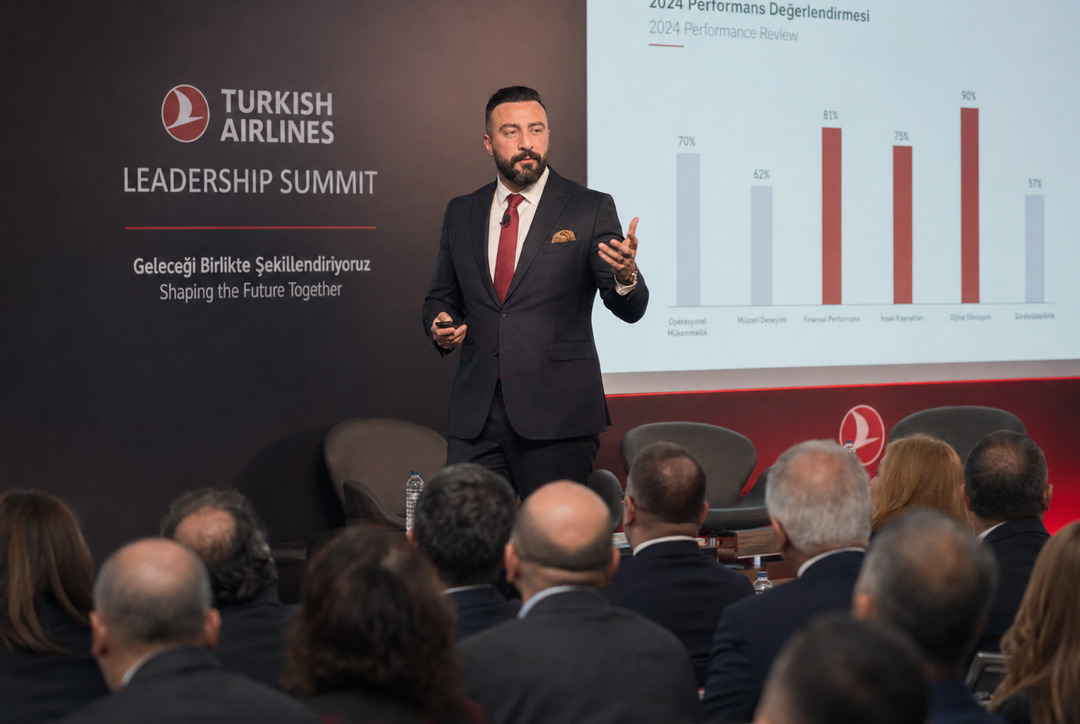
A selection of current speaker and strategy mandates. Enterprises restructuring their search economy from the ground up — with testable hypotheses, not slide-deck promises.


Five phases — reproducible, not promised.
The framework separates assumptions from measurements. Every phase produces artefacts that can be reviewed: audit reports, entity maps, schema implementations, dashboards. No output without attribution to a concrete hypothesis.
Signals,
that are measurable.
The dashboards aggregate raw signals from four layers: classical crawl (Screaming Frog, log files), semantic clusters and entity graphs (Wikidata, custom NER), cross-model citation tracking (GPT, Claude, Gemini, Perplexity) and reputation sentiment. No black box — every score traces back to the underlying data.
Deep Audit & Intelligence
AI-assisted full analysis: technical SEO, semantic gaps, entity graph, reputation fingerprint and AI visibility across ChatGPT, Perplexity and Google AI Overviews — at the signal level.
Strategy & Growth Architecture
No templates. Every strategy is distilled from data: audience psychology, semantic topic worlds, reputation goals and measurable AI-visibility OKRs — all inside one integrated system.
AI Infrastructure & Content Engine
Semantic page architecture, schema markup, entity building and structured data — content is constructed so that AI systems pick it as the preferred answer.
Reputation & Digital Authority
Systematic ORM: review management, digital PR, E-E-A-T signals, brand mentions in authoritative sources. Your brand becomes a trusted signal for human and machine.
Scaling & Live Optimization
Proprietary live dashboards, monthly AI analyses, real-time algorithm monitoring. No set-and-forget — a self-learning system that scales with your business.
Three measurement models that structure my work.
Documented, reproducible, peer-reviewable.
How much traffic an AI answer absorbs — in a single number.
Measures the structural shift of clicks into Google AI Overviews — independent of ranking changes. Qnorm normalizes for query-volume fluctuations across the observation window.
How LLM sentiment shifts — weighted by source authority.
Aggregates sentiment s ∈ [−1, +1], source weight w (Tier 1 to Tier 3) and detection confidence c. Result: a score between −100 and +100 as an early warning system for reputation drift.
Measure topical dominance — across three weighted dimensions.
Combines three normalized components (scale 0-100): EC entity coverage, LC internal link cohesion, ES external signals. Weights sum to 1.00.
Results — with context.
A selection of engagements. All numbers originate from the respective client systems (GA4, GSC, CRM) and are documented as part of public case studies. Results are not a promise for other contexts — industry, competitive intensity and starting position drive the dynamic.
“With SUMAX we have an important partner who works alongside us as part of our team.”— Benjamin Gathmann
“That’s how it’s done. As a business owner I only want to work with the best.”— René Sauerland
Long-term SEO partnership with consistent expansion of organic visibility in the German market.— Case Study





Strategic analyses of the search economy in 2026.
Domain depth rather than generic SEO tips. Current developments in AI visibility, GEO and reputation — from the perspective of 20+ years of operator experience.
How to build a Knowledge Panel: the 8-step playbook for entity trust in the Knowledge Graph.
The Knowledge Panel is not a KPI — it is the visible symptom of a verifiable entity-trust foundation. This article shows the documented 8-step playbook, extended by an operator practice layer, Wikidata properties, post-deletion recovery — and a live case with a real Google panel.
Google AI Mode · Multi-Turn SearchGoogle AI Mode: the second search engine next to AI Overviews — with its own citation logic.
AI Mode is not AI Overviews. A separate tab, multi-turn conversation across up to 30 follow-up turns, fan-out with 8–20 sub-queries, different source preferences. Anyone serving both engines with the same strategy optimizes for one and loses in the other. Reasoning skeletons, turn persistence and four new KPIs (Citation Share, Turn Persistence, Source Stickiness, Conversation Surface) as an operator setup.
Agent SEO · MCP · x402 · ACPAgentic Commerce: when AI agents buy on behalf of users — the Agent Readiness Stack 2026.
ChatGPT Operator, Claude Computer Use and Gemini Agent are shifting the conversion path: the buyer is no longer the human but the agent acting on their behalf. Four protocols (MCP, ACP, x402, AGNTCY) structure the communication. Schema stack, cookie-banner bypass, robots.txt differentiation and a 90-day roadmap toward agent readiness — before conversion drift sets in.
Entity SEO · Personal BrandEntity SEO: how a person becomes a verifiable brand — beyond personal branding.
For Google, Bing and LLMs, a person only becomes a brand once they are consistently referenced as a verifiable entity across multiple authoritative sources. Classical personal branding is no longer enough in 2026. Entity SEO is the structured, technical process of brand-building for people: a unique ID, sameAs graph, co-occurrence with topical entities, Wikidata anchor — plus the entity-density formula for control.
Online Reputation · Data EngineeringORM 2026: reputation as a structured data model — no longer PR craft.
Online reputation management in 2026 is no longer PR craft — it is data engineering. Reputation is a structured data model: entity-sentiment vectors, co-occurrence matrices, crawler cache lifetimes, recurrence in LLM training data. A storm fades in 72 hours — its trace inside the LLM context lives 60+ days. Reputation work becomes data work.
B2B · AI SearchAI Overviews: what really changes for B2B websites — and why the 41% panic doesn’t apply to you.
The popular panic “AI Overviews kill 41% of traffic” holds for B2C informational queries. For B2B websites the picture is fundamentally different — and largely strategically positive: longer decision processes, more specific queries, citation consolidation around few authoritative sources. The B2B AIO reality — with a lead-quality formula and a 90-day playbook.
International · Content ArchitectureSemantic content architecture for international brands — why 15 language markets must not mean 15 entities.
International brands don’t fail at translation — they fail at architecture. Anyone rolling out 15+ language markets with mirrored content produces 15 identical entities for Google and LLMs, not one brand with 15 instances. The four-layer model: entity core + topical-map backbone + localized content nodes + author entities with cross-lingual sameAs.
53 terms. 33 detail pages.
One operating knowledge system.
Terms, frameworks and tools around SEO, GEO and AI visibility — defined, documented, machine-readable. Free, no sign-up, openly citable under CC BY 4.0.
Terms of the search economy 2026
45 precisely defined terms from classical SEO, Generative Engine Optimization and entity engineering. With formulas, benchmarks and cross-references to 14 in-depth detail pages.
GEO Readiness Check
10 questions. Score 0-100. Gap analysis for your AI visibility in under 3 minutes.
Schema Generator
JSON-LD for Person, Organization, Article, FAQPage — form-based, valid, no tracking.
Public Benchmarks
Aggregated audit data from 500+ enterprise domains. Refreshed monthly, SVG charts.
AI Search Index
18–24 pages. Benchmarks, top citations, reputation drift. Free with pre-order.
My Stack
21 tools with versions, purpose and selection rationale. No affiliate links, no referral commissions.
Common questions,
clear answers.
The architecture of search has shifted. Google integrates generative answers directly into the results page; ChatGPT, Perplexity and Copilot reach hundreds of millions of users daily, citing a tightly curated set of sources per answer. Classical SEO optimizes for ranking positions — what is now also required is optimization for inference: passage-level citability, entity signals, semantic co-occurrence. Agencies whose workflow ends at keyword lists and backlink counts do not structurally cover this layer.
Through a three-stage system: (1) entity building — your brand is recognized by LLMs as a clearly defined entity (Wikidata, Knowledge Graph, structured data). (2) passage-level optimization — content is constructed so that AI models cite it as an authoritative passage. (3) authority signals — digital PR, brand mentions in LLM training sources, and semantic co-occurrence with relevant entities. The outcome: a measurably higher mention rate in generative answers.
It depends on starting position, competition and content maturity. Documented engagements: Soft & Cloud +176% qualified leads at −60% ad spend, Burgia Sauerland +133% revenue and +260% new customers, UE Germany +43.8% organic traffic. These are individual cases, not averages — and they emerged from 12 to 36 months of consistent work. Measurement happens inside client systems (GA4, GSC, CRM); attribution runs to pipeline and revenue level, not ranking positions.
With reputation engineering — a proactive system of sentiment monitoring, search suggest control, authority content seeding and algorithmic suppression. We control which signals Google, Bing and LLMs process on brand queries: from review distribution and Wikipedia footprint to E-E-A-T signals in highly authoritative sources. Your brand becomes a trusted signal for human and machine — robust against crises, competitor attacks and AI hallucinations.
Off-the-shelf tools like Ahrefs or Semrush model the classical SERP — that remains important. The gap: how the brand itself is treated inside generative systems. A cross-model audit therefore runs in parallel — typically 500 to 2,000 curated prompts, queried repeatedly across GPT, Claude, Gemini and Perplexity, with analysis of mention rate, position, sentiment and source citation. Combined with classical KPIs it produces a more complete picture than the sum of the individual tools.
I work exclusively with companies for whom visibility is a strategic revenue lever — typically from an annual investment in the mid six-figure range upward. ROI only computes when the market potential carries the investment. In the strategy call we analyze together whether your setup meets the conditions for scalable growth — honestly and without sales pressure.
We scale SEO and AI-visibility strategies across 15+ language markets — from DACH through Western Europe, Türkiye, MENA and into North America. Clients such as Turkish Airlines, Volkswagen, Johnson & Johnson and ThyssenKrupp are supported multilingually and multi-regionally. This includes hreflang architectures, regional entity signals, LLM optimization in languages beyond English and country-specific reputation strategies.
Ready for the next growth cycle?
Talk to me about your goals. In a 30-minute strategy call we analyze your potential and identify the decisive levers.
Three minutes for the context I need.
Inquiry sent.
Thank you — I have received your message and will reply personally within 24 hours.